Rapid Trades: missed-call recovery
Problem: a home-services business losing jobs to whichever competitor picked up first, because every missed call was just a missed call: no follow-up, no record, no second chance.
Build: Fenn (Vapi + a cloned voice trained on how the business actually talks) answers what would've rung out, qualifies the lead, and books it. If the call ends without a booking, an SMS follow-up fires within seconds.
Result: live and running since May 2026. Every call now gets a real response, immediately, whether or not a human is free. Full quantified numbers going up as a proper case study once there's a full quarter of data to report honestly, not a rounded-up early number.
if (word_count(script) > 105) {
if (attempts < 2) {
script = claude.compress(script)
attempts++; recheck()
} else {
fail_loudly("still over length")
}
} else { proceed() }
reply = claude.classify(email_body, {
labels: ["INTERESTED", "OPT_OUT", "AUTO"]
})
if (reply == "OPT_OUT") {
crm.tag("opted-out"); blocklist.add(lead)
} else if (reply == "INTERESTED") {
crm.tag("hot-lead"); notify(owner)
}
Every cold-email reply, read and routed automatically
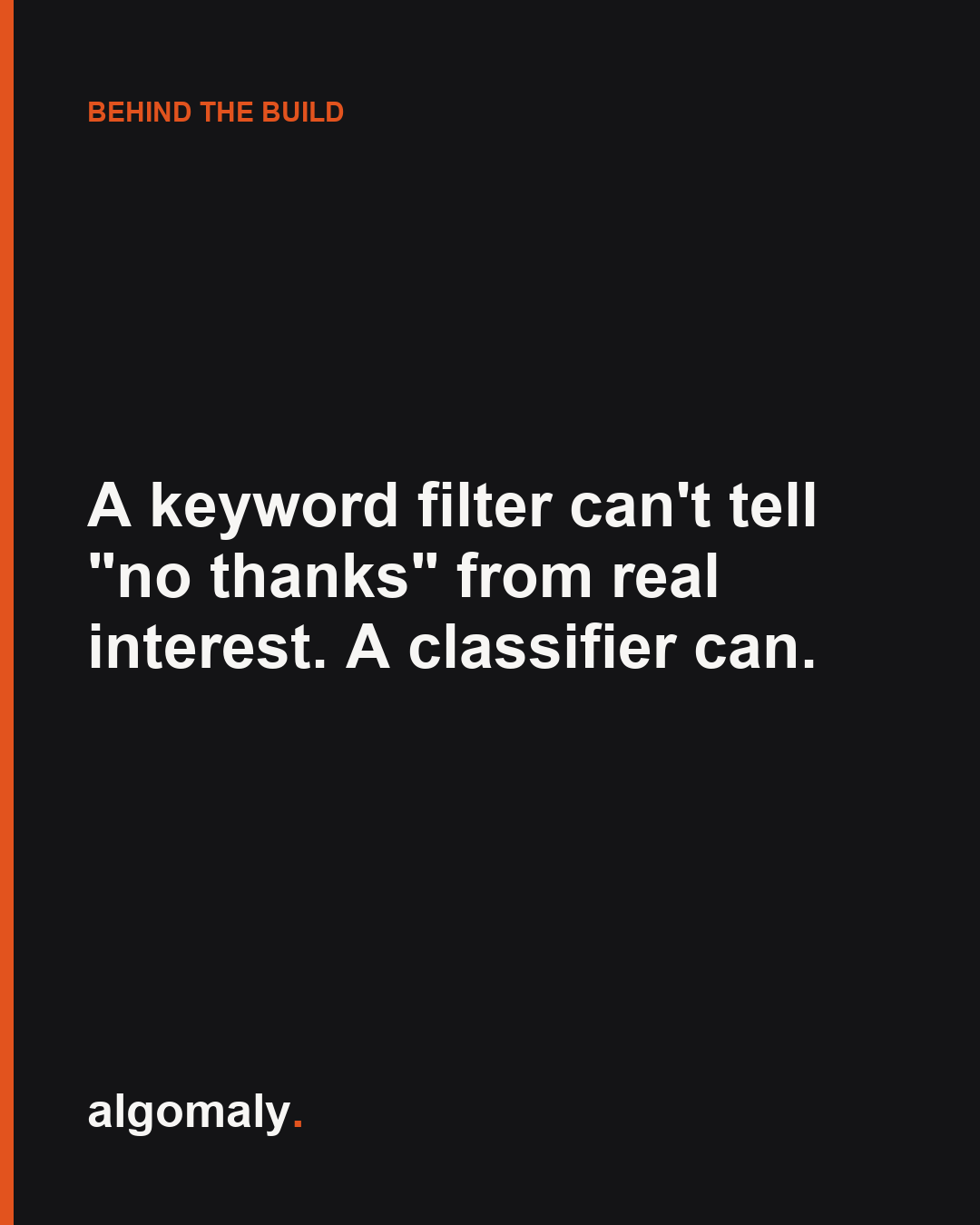
Problem: keyword filters can't tell a genuine "interested" from an out-of-office, a polite decline, or someone sarcastically mirroring your own words back at you.
Build: Wick reads the actual reply, classifies intent, updates the CRM, and alerts a human only when it's real. No manual triage of every inbox reply.
Result: Wick isn't perfect, and we'd rather say so than hide it. It once flagged a reply as "interested" that was almost certainly someone being short with us for following up too soon. That's exactly the kind of edge case worth catching and improving, not the kind worth pretending doesn't happen.
Diagnosing why a video wasn't spreading, properly
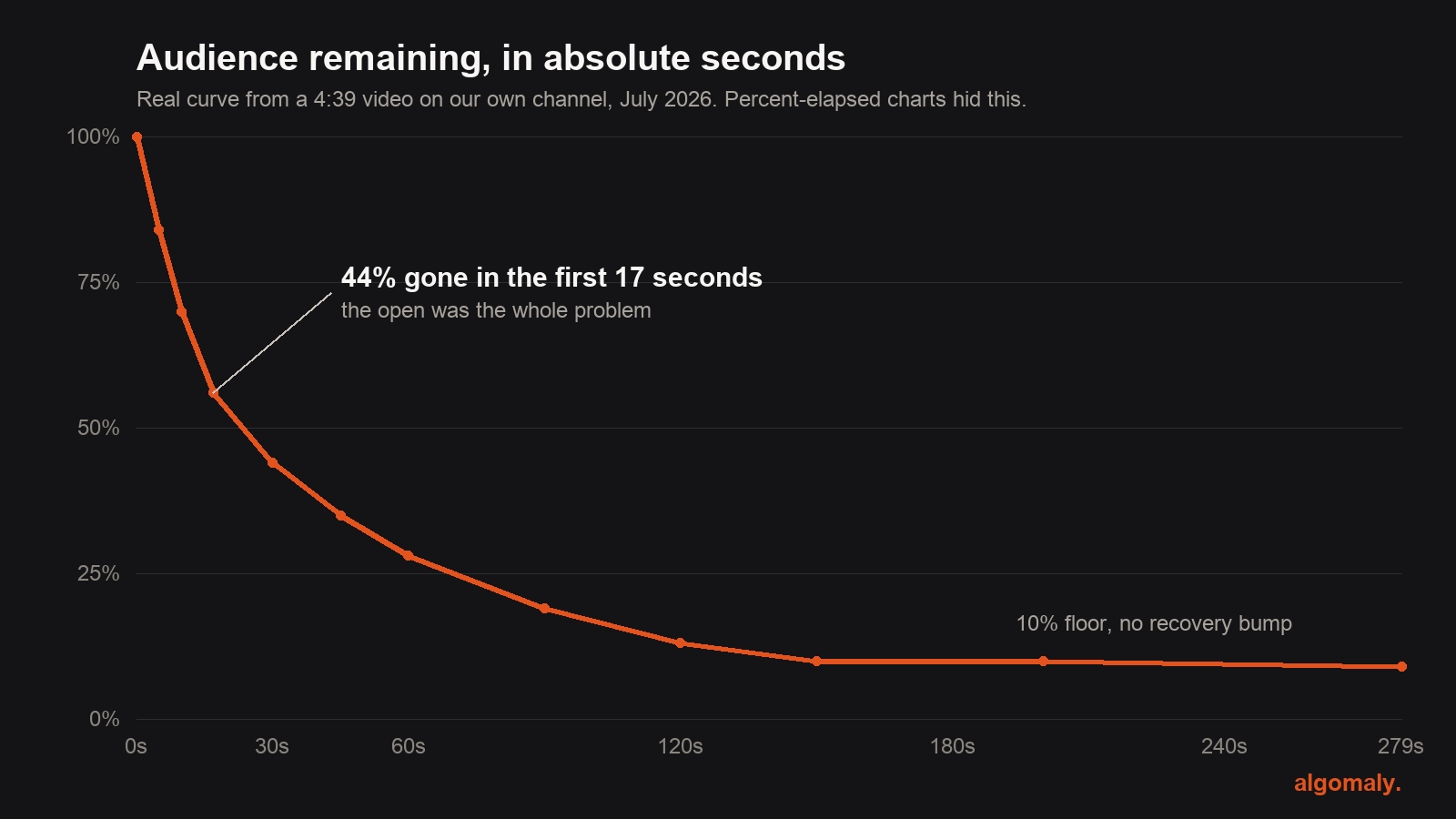
Problem: a short-form video's retention chart looked like it had regressed week over week, except the videos weren't the same length, so the percentage-elapsed chart was comparing apples to oranges.
Build: re-ran the same data in absolute seconds instead of percentage-of-duration, which is the only way to compare retention across videos of different lengths without a duration artifact distorting the read.
Result: the real problem wasn't a regression at all. It was a consistent 5-10 second drop-off across every video, which is a hook problem, not a length problem. Wrong diagnosis would've meant fixing the wrong thing.